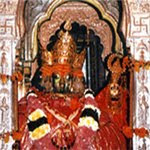
One can find traces of South Indian architecture in the Ramavaikunth Temple in Pushkar. Built in the 20th century it is believed that artisans from South India were brought to give this shape to the temple in Pushkar. Located atop a hill one can get a panoramic view of the city and the Pushkar Lake on their tour to the Ramavaikunth Temple. The towering spires of Ramavaikunth Temple make it a beautiful sight for the tourists.
The architectural marvel of the Ramavaikunth Temple in Pushkar draws a number of tourists to this unique temple in Pushkar. From towering spires to the pagodas, the Ramavaikunth Temple has a different look quite unlike the other Hindu Temples in Pushkar. The Ramavaikunth Temple has intricately carved images of 361 different deities and is considered to be a sacred place for the Hindu pilgrims.
How to Reach Ramavaikunth Temple:
In order to reach the Ramavaikunth Temple, you can take the following routes:
Airport :- Jaipur Airport (131km) is the nearest airport.
Railhead :- Ajmer Railway Station (11km) is the nearest railhead.
Pushkar is a well-known Hindu pilgrim centre. It is just 10 km from Ajmer. The Pushkar lake and the Brahma temple are the most important sites here. Pushkar is better known for the cattle fair.
Location : Located in the state of Rajasthan in the north India.
Major Tourist Attractions : Pushkar Lake, Brahma Temple, Nag Pahar, The Ghats.
Best Hangouts : Pushkar Lake
Best Buys : Cattle during the cattle fair (Pushkar Camel Fair)
Best Activity : Camel Ride during the Camel Fair
Festival : Pushkar Camel Fair
Nearby Tourist Destinations : Ajmer, Jaipur, Sawai Madhopur.
About Pushkar
Pushkar is a sacred town for the Hindus, situated 11 kms. to the North-West of Ajmer. The charm of this sleepy, lakeside settlement so captivated the great Indian poet, Kalidas, that it found a place in his classic, Abhigyan Sakuntalam. The Great Hindu epics of Mahabharat and Ramayana make references to this religious place regarded to be Adi Tiratha. Evidence points to its having existed during the fourth century B.C. lake in the inhospitable surroundings of a desert is no less than a miracle.
The legend about the Creator God, Bramha describes the creation of this lake. When the demon Vajra Nabha killed Brahma's children, he in turn struck him with his weapon, a lotus flower. Vajra Nabha died with the impact, and the petals of the lotus fell at three places. One of them is Pushkar, where a lake sprung into being. Brahma is supposed to have performed sacrifice at this lake on Kartik Purnima (the full moon day of the Kartik month), hallowing the place. Sacred to Brahma, Pushkar boasts of its temple dedicated to him, which is the only one of its kind in the world. A dip in the waters of Pushkar and worship at his temple ensure salvation. So thousands flock to Pushkar to observe the ritual on kartik Purnima, or on any of the four days preceding it.
Tourist Attractions in Pushkar :
Pushkar Temples
One can see numerous temples of all sizes here. The most famous temple is the Brahma Temple, said to be only one temple dedicated to Brahma in India. Another important temple is that of Goddess Savitri Temple, wife of Lord Brahma located on a hilltop. It takes a one-hour trek to reach the temple, but it has an amazing view of Pushkar Lake in the morning.
The Ghats
You can have a great spiritual experience at the numerous ghats of Pushkar running down the lake. The holy lake has 52 ghats and piligrim taking a ritual dip in the lake is a common sight.
The Pushkar Lake
The Pushkar Lake is considered no less sacred than the Holy Ganges. The lake has a mythological significance associated with it. On the auspicious occasion of Kartik Purnima, devotees from all over the country throng the lake for a holy dip, which is believed to wash away the sins.
Pushkar Cattle Fair
Although a peaceful town, Pushkar bustles with life with the arrival of much awaited joyous celebration held on Kartik Purnima. Every year thousand of devotees pull into the town and throng the lake around the full moon day of Kartik Purnima in October-November to take a holy dip in the lake. A huge and colourful the Pushkar Camel Fair, is also held during this time. The festival is marked with dance, music and cultural events with several colourful shops springing up around to add more colours to this fair. Also on sale are mouth-watering traditional delicacies. Colourfully attired village folk enhance the fun of the occasion. Cattle auction and camel races are also a part of the festivities.
Accommodation in Pushkar
There are several luxury accommodations available in Pushkar. The Pushkar Hotels ranges between luxury and budget. We offer you best accommodation option available in Pushkar, keeping your interests and expenses in mind.
Temples in Pushkar & Ghats in Pushkar
Varah Temple
The Varah temple of Hindu was built in the 12th century and, and the Mughal emperor Aurangzeb is said to have destroyed it. Aurangzeb was understandably rather upset with the huge statue of Varah, the god with the body of a man and the head of a boar. However, Raja Sawai Jai Singh II of Jaipur thought differently, and in 1727 reconstructed the temple which now has a highly decorated inner sanctum where an idol of Varah is placed.
Mahadeva Temple
The 19th century Mahadeva temple with its five-faced statue of Mahadeva is made entirely of white marble. This Hindu temple is remarkable for its elegance of structure, and is perhaps the finest of all temples in and around Ajmer and Pushkar.
Ramavaikunth Temple
The Ramavaikunth temple is an intricately carved Hindu temple dating to the 1920 and has images of 361 deities. Its high stone spires atop pagodas and the rest of the temple were built by masons especially brought for this purpose from south India. The Savitri temple is located on top of a hill overlooking the lake. The hike up the hill is long and arduous via a stairway built in the 4th century, and if panoramic views are a necessity for you, the trek will be worth it. This temple is dedicated to Brahma’s wife Savitri and its origin dates back to over 2,000 years.
Gayatri Temple
The Gayatri temple on the other side of Pushkar is in honour of the wife who sat by Brahma’s side in Savitri’s absence during Brahma’s ceremonial sacrifice. Legend says that Gayatri was an untouchable and to purify her she was put into the mouth of a cow and taken out from the other end. To reach the Gayatri Hindu temple the best route to take is from behind the bus stand and walk up a hill. Both the Savitri temple in Pushkar and Gayatri temple in Pushkar are closed – so to say – during lunch hours and the best time to go is either before noon or in the evening.
Raghunath Temples
Two Raghunath temples exist in Pushkar; one is the old one and the other is relatively new. The Old Raghunath temple was built in 1823 and houses images of Venugopal, Narasimha (Vishnu’s fourth incarnation) and Lakshmi, the goddess of wealth. But there’s a bit of a problem for foreign tourists visiting these two temples because of one little sign which says "Foreigners not allowed." These are probably the only binary temples in India where such segregation exists.
Pap Mochini Temple
Towards the northen section of Pushkar is the Pap Mochini temple, not really popular for its architecture or deity but for the simple belief that anyone who kills a Brahmin will be purified of this deed by visiting the Hindu temple, of course, all that was applicable in olden times, for today a murder is a murder and the law would hear nothing else.
Bathing Ghats
Where there is a mass of holy water there will be bathing ghats, and in Pushkar it is the same as all over India. Pushkar lake is surrounded by hundreds of ghats where Hindu pilgrims assemble to bathe, pray or just loiter around. Removing ones shoes would be a good idea unless you want to be glared or shouted at! Photography is a strict no-no, especially of bathing women. Pushkar is quite used to tourists, but unlike Varanasi, is home for orthodox Hindus, and a little care to observe Hindu traditions can help.
Shopping & Recreation in Pushkar :
The contrast to the blank desert is the riot of Colours - the large gaudy turbans of the native males arriving here to trade their animals or to set up the stalls to cater to the booming captive market, and the loud hues of the pleated ghagaras (ankle-length skirts) of the belles bangled by the armful, be jewelled from head to toe-adding charm and zest to the massive affair. A large number of traders gather at the Pushkar Fair and set up shops.
They sell a host of products like bead necklaces of Nagaur, woollen blankets of Merta, textiles printed in Ajmer and Jodhpur, brassware of Jodhpur and Jaipur etc. Also on sale are saddles, ropes, and assorted household items. Vendors peddle their dazzling range of wares at hundreds of roadside stalls. Small groups of men and women can be seen tatooing names and pictures on their hands and other parts of the body. During the fair, cultural shows and exhibitions are organized to enliven the event.
Getting There
Air : The nearest airport is Jaipur Airport (145 km), from where one can take flights for Delhi and Mumbai.
Rail : Ajmer is the nearest railway station from where one can take trains for the major destinations in Rajasthan and other parts of India.
Road : Pushkar is connected to Ajmer by road. Buses, jeeps and taxis are also available.
 The beauty of Ajmer is known to the travelers very well. The city is visited by thousands every year chiefly for the holy shrine of Dargah Sharif, Ajmer which has been the major crowd puller. But the other attractive proposition of the city that too has played an important role in the beautification of Ajmer is the famous Ana Sagar Lake, Ajmer. The lake has been an outstanding landmark of the city from the 11th century and has served to the cause of the city as well.

The lake was built in the 12th century by putting up a dam across the Luni River and the lake was named after the then ruler of Ajmer Anaji Chauhana. The lake is surrounded by some of the marvelous piece of attractions of the city like the Daulat Bagh that was built by Shah Jahan and is built completely by marble stones. Surprisingly the lake dries up completely during the summers.
Ana Sagar Lake is surrounded by many other attractions like the temple of Khobra Behroon which lies on the southern bank of the lake. The lake is an artificial creation that has been a lifeline for the people of Ajmer in the past. The lake still serves as a lifeline of beauty to the city to the locals and the visitors as well. 
The best time to visit the Ana Sagar Lake, Ajmer is between the months of October to March when the climate remains cool and the water level up to the mark. The various nearby attractions of the lake are Adahi-Din-Ka Jhopra, Taragarh Fort, Nasiyan and Prithviraj Smarak.
 Information on Pushkar population of 2001 revealed that the town had a gross population of 14,789 and males formed 54% of the population whereas women formed 46 % of the population. The average literacy rate of Pushkar is about 69% higher than the national average which is around 59%.Facts about Pushkar language points that Hindi, Rajasthani and English are the popular language of Pushkar.Information on Pushkar population of 2001 revealed that the town had a gross population of 14,789 and males formed 54% of the population whereas women formed 46 % of the population. The average literacy rate of Pushkar is about 69% higher than the national average which is around 59%.Facts about Pushkar language points that Hindi, Rajasthani and English are the popular language of Pushkar.
 Pushkar is said to be the abode of Lord Brahma. In Pushkar the only temple dedicated to Lord Brahma is located. If you come to Pushkar for your pilgrim tour, then spare some time to visit the Kedalganj Bazaar in Pushkar.
The Kedalganj Bazaar in Pushkar is one of the most promising shopping areas in Rajasthan. Although you can travel with the intention of discovering spiritual India, but at the same time you can also drop in to the various shops and get for yourselves some of your most liked items.
Since Pushkar is mainly a spiritual place, you can get a wide number of small idols made up of rock. Of these the Shiva Lingams are the most precious, especially for the Shaivaites. You shall also be able to obtain some other idols like Ganesha, Durga and other Hindu Gods and Goddesses.
Not only would you get some of the statues of your favorite gods and goddesses, you shall also be able to obtain some of the best handicraft items that are typical products of Rajasthan. These colorful handicrafts are some of the most coveted items that a tourist can take back home. Leather goods like small and large bags, suitcases, long-lasting leather shoes and garments are also available in the Kedalganj Bazaar Pushkar. 
If you have a fancy for fashion garments or embroidered clothes, then you will surely feel enchanted while witnessing the embroidered garments that hang in the shops. Miniature Paintings and a plethora of art goods that line your way would beckon you with their everlasting charm.
Kedalganj Bazaar Pushkar is a hot favorite among shopping buffs. If you visit Pushkar, do make it a point to visit this interesting place. It would definitely be an enchanting experience for you.